Predicting the Hack: How AI Defenses Neutralize Malware Before It’s Even Written

Predicting the Hack: How AI Defenses Neutralize Malware Before It’s Even Written
Introduction
The next cyberattack is already being planned. But what if you could stop it before the first line of malicious code is even written?
AI malware detection makes this possible. By analysing patterns, behaviours, and code structures, modern AI systems can predict and neutralise threats proactively — long before traditional antivirus tools even see them.
In this post, you’ll learn how this revolutionary approach works and why it’s becoming essential for UK businesses in 2026.
The Evolution of Malware: From Static to Evolving Threats
Traditional malware is easy to detect with signatures. Today’s attackers use polymorphic, metamorphic, and AI-generated malware that constantly changes shape. This makes signature-based antivirus almost useless.
AI malware detection shifts the game from reactive to predictive defence.
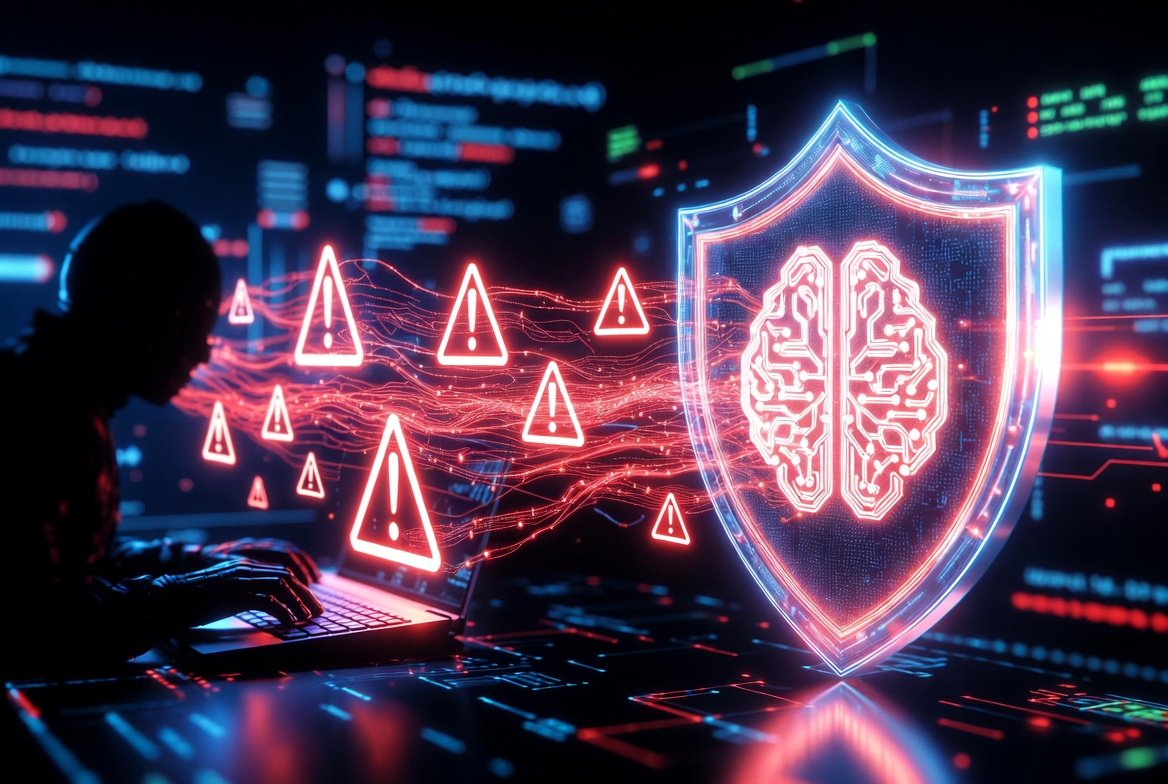
How AI Predicts Malware Before It’s Written
Advanced AI systems analyse millions of code samples to learn what malicious code looks like — even when it doesn’t exist yet. They examine:
Code structure and syntax patterns
Behavioural intentions
API calls and system interactions
Anomalies in development patterns
This allows AI malware detection tools to identify and block new threats in real-time during the development or delivery phase.
Key Technologies Behind Predictive AI Malware Defense
Machine Learning & Deep Learning — Trained on massive threat intelligence datasets
Natural Language Processing (NLP) — Treats code as a language to understand intent
Behavioural Analysis — Monitors actions rather than just files
Generative AI — Simulates potential future malware variants
Graph Neural Networks — Maps relationships between code components
Real-World Benefits of AI Malware Detection
Organisations using proactive AI malware detection are seeing:
85–95% detection rates on zero-day threats
Dramatic reduction in breach incidents
Faster response times (milliseconds instead of days)
Lower security operation costs
Protection against AI-generated malware
How to Implement AI-Powered Malware Defense
Here’s a practical implementation roadmap:
Assess your current security stack
Integrate AI-powered endpoint protection platforms
Deploy code security scanners with predictive capabilities
Enable behavioural threat detection
Use threat intelligence feeds enriched with AI
Train your security team on AI-driven alerts
Regularly test with simulated adversarial attacks
Industries That Benefit Most
Finance and Banking
Healthcare
Government and Defence
Retail and E-commerce
Legal and Professional Services
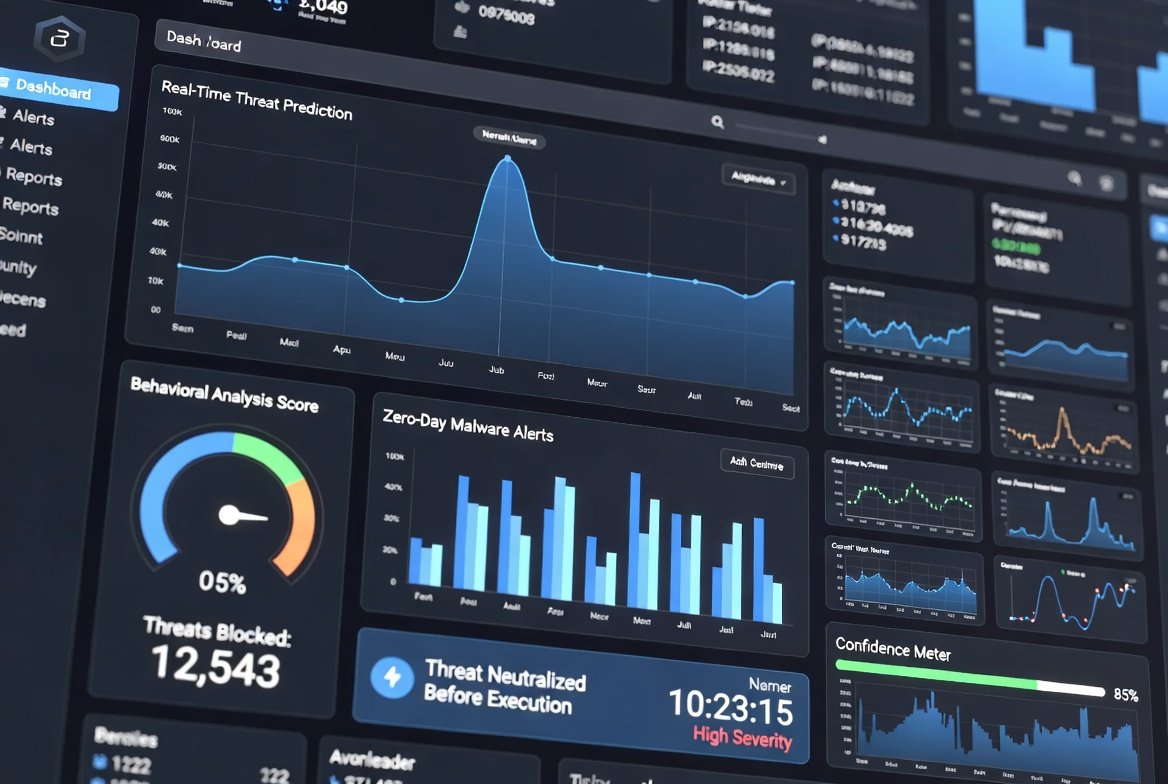
AI vs AI: The Rise of Adversarial Malware
Attackers are now using AI too. This makes proactive AI malware detection even more critical in the ongoing arms race.
Future of Cybersecurity: Predictive and Autonomous Defense
Next-generation systems will not only detect but automatically neutralise threats with minimal human intervention.
FAQ Section
What is AI malware detection?
AI malware detection uses artificial intelligence to identify and stop malicious software by predicting threats based on patterns, even before the malware is fully created or deployed.
Can AI really detect malware that hasn’t been written yet?
Yes. By learning from millions of existing malware samples and their variations, AI can recognise suspicious code structures and behaviours in new threats.
How is this different from traditional antivirus?
Traditional antivirus relies on known signatures. AI malware detection focuses on behaviour, intent, and anomalies — making it effective against brand-new and zero-day attacks.
Is AI malware detection suitable for small businesses?
Absolutely. Many cloud-based AI security solutions are affordable and easy to deploy for businesses of all sizes.
What should I look for in an AI malware detection solution?
Look for behavioural analysis, real-time prediction, low false positives, easy integration, and strong threat intelligence backing.
11. Conclusion with CTA
The future of cybersecurity is predictive, not reactive. AI malware detection gives organisations the power to stop attacks before they even begin — neutralising malware before the first harmful line is written.
Don’t wait for the next breach to upgrade your defences.
Ready to implement proactive AI malware detection for your business?
Contact the cybersecurity experts at Humai Webs today. We help UK companies deploy intelligent, AI-powered security solutions that stay ahead of evolving threats.
Visit humaiwebs or get in touch for a free security assessment.