On-Page vs Off-Page SEO: Key Differences Explained
On-Page vs Off-Page SEO Explained
Introduction
On-Page vs Off-Page SEO which one matters more for your website’s success? If you run a business in the UK or want better Google rankings, understanding these two pillars of search engine optimization is essential.
Many website owners focus on just one side and wonder why their traffic stays flat. The truth is, both work together like engine and fuel. On-page SEO optimizes what you control on your site, while off-page SEO builds authority from outside.
In this detailed guide, you’ll learn clear differences, proven strategies for 2026, and practical tips to boost your rankings. Whether you’re new to SEO or looking to refine your approach, this post from Humai Webs will help you create a winning strategy.
What Is On-Page SEO?
On-page SEO involves all the optimizations you make directly on your website. It helps search engines understand your content and improves user experience. Google and other engines use these signals to decide if your page matches a user’s search intent.
Key elements include high-quality content, proper keyword placement, meta tags, fast loading speed, and mobile-friendly design. When done right, on-page SEO makes your pages more relevant and user-friendly.
What Is Off-Page SEO?
Off-page SEO covers activities outside your website that build its reputation and authority. The main goal is to show search engines that other trusted sites value your content.
This primarily happens through backlinks, but also includes social signals, brand mentions, and online reputation. Off-page efforts tell Google your site is trustworthy and popular in your industry.
On-Page vs Off-Page SEO: Key Differences
Here’s a clear side-by-side comparison:
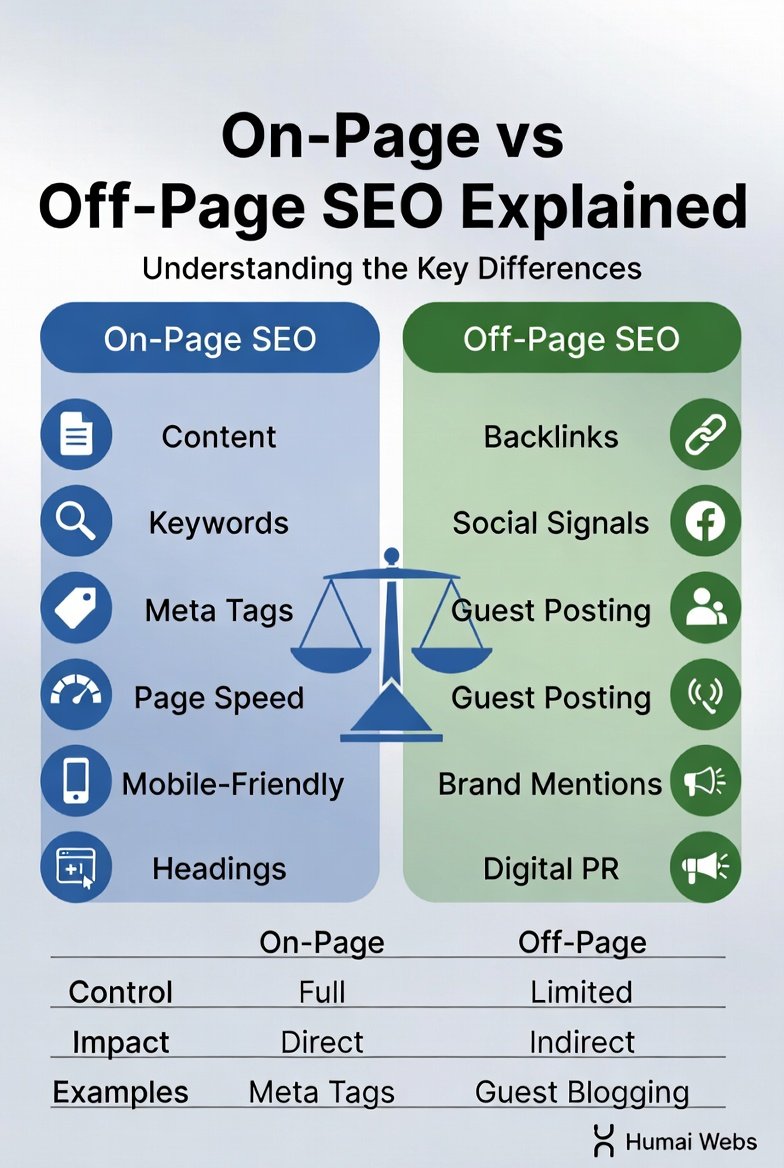
Control: You have full control over on-page SEO. Off-page SEO depends on external parties.
Focus: On-page targets content, structure, and technical elements. Off-page builds external authority and trust.
Main Elements: On-page includes titles, headings, content quality, images, and internal links. Off-page relies on backlinks, guest posts, social media, and influencer mentions.
Speed of Results: On-page changes show results faster. Off-page takes longer but creates lasting authority.
User Experience: On-page directly improves how visitors interact with your site. Off-page enhances credibility that influences clicks and trust.
Essential On-Page SEO Techniques for 2026
Start with thorough keyword research that matches user intent. Place your primary keyword naturally in the title, introduction, headings, and throughout the content at about 1% density.
Write compelling meta titles (50-60 characters) and meta descriptions (140-160 characters). Use proper heading structure — one H1 and logical H2/H3 tags. Optimize images with descriptive file names and ALT text.
Improve page speed by compressing images, using caching, and choosing a fast host. Ensure mobile responsiveness. Add internal links to related pages on your site. Focus on E-E-A-T (Experience, Expertise, Authoritativeness, Trustworthiness) by creating in-depth, original content.
In 2026, search engines reward helpful, user-first content that answers questions completely.
Powerful Off-Page SEO Strategies That Work in 2026
The foundation of off-page SEO remains quality backlinks from authoritative sites. However, focus on earning links naturally rather than buying them.
Create shareable content like guides, infographics, or research studies that others want to link to. Engage in digital PR to get mentions in news outlets. Participate in relevant forums and communities without spamming.
Build relationships with influencers and bloggers in your niche. Maintain active social media profiles to increase brand visibility and signals. Monitor and manage your online reputation through reviews and mentions.
Unlinked brand mentions also carry weight as search engines become smarter at understanding context and authority.
Why You Need Both On-Page and Off-Page SEO
Relying on only one is like building a strong car with no fuel or great fuel with a weak engine. On-page makes your pages ready for success, while off-page gives them the authority to rank higher.
Together, they create a complete SEO strategy that drives sustainable organic traffic. Sites that balance both see better rankings, higher click-through rates, and improved conversions.
H3: Common Mistakes to Avoid in On-Page vs Off-Page SEO
Many beginners stuff keywords unnaturally or chase low-quality backlinks. These practices can harm your rankings. Always prioritize quality and user value over shortcuts.
How to Create a Balanced SEO Strategy for Your UK Website
Audit your current on-page elements using tools like Rank Math or Google Search Console.
Identify content gaps and create pillar pages with supporting cluster content.
Build a consistent link acquisition plan focused on relevance.
Track progress with analytics and adjust monthly.
Stay updated with Google algorithm changes.
At Humai Webs, we help UK businesses implement these strategies effectively for measurable growth.
9. FAQ Section
FAQ
What is the main difference between On-Page vs Off-Page SEO?
On-page SEO optimizes elements on your website like content and technical factors. Off-page SEO builds authority through external signals like backlinks and mentions.
Which is more important: On-Page or Off-Page SEO?
Both are equally important. Strong on-page SEO provides a solid foundation, while off-page SEO boosts credibility and rankings. Use them together for best results.
Does On-Page SEO affect Off-Page SEO?
Yes. High-quality on-page content is easier to promote and earn natural backlinks for off-page SEO.
How long does it take to see results from Off-Page SEO?
Off-page efforts usually take 3-6 months or longer to show significant ranking improvements, unlike faster on-page changes.
Can I do On-Page vs Off-Page SEO myself?
You can handle basic on-page tasks easily. For advanced off-page strategies and technical audits, professional help from experts like Humai Webs often delivers better ROI.
10. Conclusion with CTA
Understanding On-Page vs Off-Page SEO gives you the knowledge to improve your website’s visibility in 2026 and beyond. By optimizing both aspects, you create a powerful combination that search engines love and users trust.
Don’t leave your rankings to chance. Start implementing these strategies today for sustainable traffic growth.
Ready to boost your UK website’s SEO performance? Contact the team at Humai Webs for professional SEO services tailored to your business goals. Visit Humaiweb and let’s grow your online presence together.
Conclusion
On-Page and Off-Page SEO are both essential for achieving higher Google rankings and increasing organic traffic. A balanced SEO strategy that combines both methods helps businesses grow online successfully.