Green Code: 5 Strategies to Lower Your Cloud Data Center’s Carbon Footprint

Green Code: 5 Strategies to Lower Your Cloud Data Center’s Carbon Footprint
Introduction
Cloud data centers power our digital world, but they also consume massive energy and contribute significantly to global carbon emissions. As businesses scale online, learning how to lower cloud data center carbon footprint has become essential for responsible growth.
The good news? You can achieve major reductions without sacrificing performance. This guide reveals five practical strategies that forward-thinking companies use to create greener, more efficient cloud operations. Whether you manage your own infrastructure or work with major providers, these tactics deliver real results.
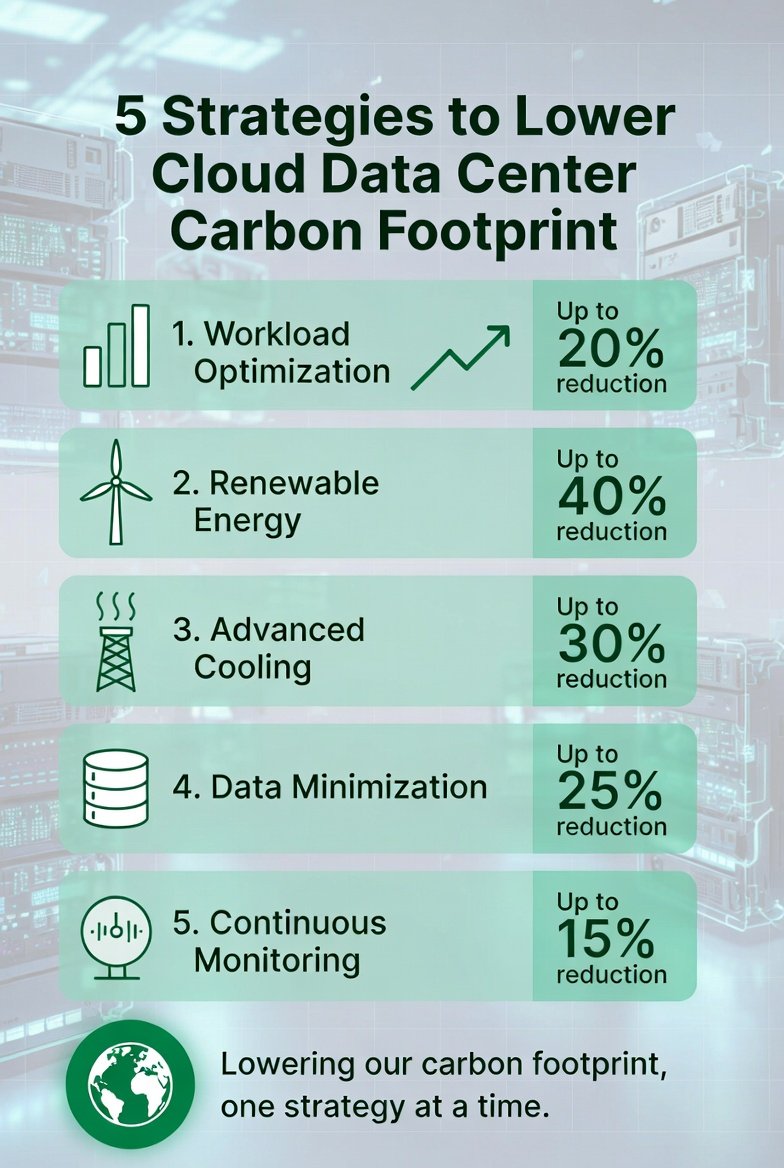
Strategy 1: Optimize Workloads and Resource Utilization
One of the fastest ways to lower cloud data center carbon footprint is through smart workload optimization. Many servers run at low utilization rates, wasting energy.
Key actions include:
Implement auto-scaling to match resources with actual demand
Use containerization and serverless computing
Right-size instances regularly
Schedule non-critical jobs during off-peak hours
Virtualization and efficient resource allocation can boost server utilization from typical 20-30% to 60-80%, cutting energy needs dramatically.
Strategy 2: Choose Renewable Energy Sources
Switching to renewable energy is one of the most impactful steps. Many leading cloud providers now offer options to run workloads on solar, wind, or other clean sources.
How to implement:
Select regions with high renewable energy availability
Use carbon-aware computing tools that shift workloads to cleaner grids
Purchase renewable energy certificates (RECs)
Partner with providers committed to 100% renewable goals
This strategy directly reduces the carbon intensity of your operations.
Strategy 3: Adopt Advanced Cooling Technologies
Cooling systems consume up to 40% of a data center’s energy. Modern solutions can slash this significantly.
Effective cooling approaches:
Liquid cooling systems
Free air cooling in suitable climates
Hot/cold aisle containment
AI-powered cooling optimization
These technologies maintain performance while using far less power and water.
Strategy 4: Implement Data Minimization and Storage Optimization
Not all data needs constant high-speed access. Smart storage strategies help lower cloud data center carbon footprint by reducing active storage demands.
Best practices:
Move cold data to energy-efficient archive tiers
Delete unnecessary duplicates and old backups
Use compression and deduplication
Set automatic lifecycle policies
Less stored data means fewer servers running 24/7.
Strategy 5: Monitor, Measure, and Continuously Improve
You cannot improve what you do not measure. Robust monitoring forms the foundation of sustained progress.
Essential tools and metrics:
Power Usage Effectiveness (PUE)
Carbon Usage Effectiveness (CUE)
Real-time energy dashboards
AI-driven predictive analytics
Regular audits and adjustments ensure your strategies keep delivering results over time.
How to Measure Your Current Cloud Carbon Impact
Start with cloud provider tools that offer carbon footprint reports. Combine these with third-party calculators for a complete picture of your emissions.
Additional Tips for Maximum Impact
Combine these strategies for multiplicative benefits. For example, pairing renewable energy with efficient cooling creates powerful synergy. Train your team on sustainable practices and consider green coding principles that write more efficient applications.
FAQ Section
What is a cloud data center carbon footprint?
A cloud data center carbon footprint measures the total greenhouse gas emissions from powering, cooling, and operating servers and related infrastructure.
How quickly can I lower my cloud data center carbon footprint?
Many organizations see 20-40% reductions within the first year by implementing optimization and renewable energy strategies.
Do green strategies affect cloud performance?
No. Modern sustainable approaches often improve performance through better resource management and newer technologies.
Which cloud providers help lower carbon footprint?
Major providers like AWS, Azure, and Google Cloud offer tools, regions, and commitments focused on sustainability.
Is it expensive to reduce cloud emissions?
Initial investments often pay back quickly through lower energy costs and operational efficiency.
Conclusion with CTA
Lowering your cloud data center carbon footprint is both an environmental responsibility and a smart business move. By applying these five strategies — optimization, renewables, advanced cooling, data minimization, and continuous monitoring — you can achieve significant emission reductions while cutting costs.
Ready to build a greener cloud infrastructure? Contact the experts at Humai Webs today for a free consultation on sustainable cloud solutions tailored to your business needs. Visit humaiwebs to get started.