From Pixels to Physicality: How Generative AI Is Giving Robots Real-World Common Sense

Introduction
For decades, robots have struggled with real-world unpredictability. They excel in controlled environments but fail at everyday tasks requiring common sense.
Generative AI robotics is changing that. By combining powerful generative models with physical robots, engineers are finally bridging the gap between digital understanding and real-world action. In this guide, you’ll discover how generative AI robotics is creating smarter, more adaptable machines.
The Long-Standing Problem: Robots Lack Common Sense
Traditional robots follow pre-programmed instructions perfectly in labs but break down when facing unexpected situations — a spilled drink, a slightly moved object, or a new environment. This “reality gap” has been one of the biggest barriers in robotics.
How Generative AI Bridges the Gap
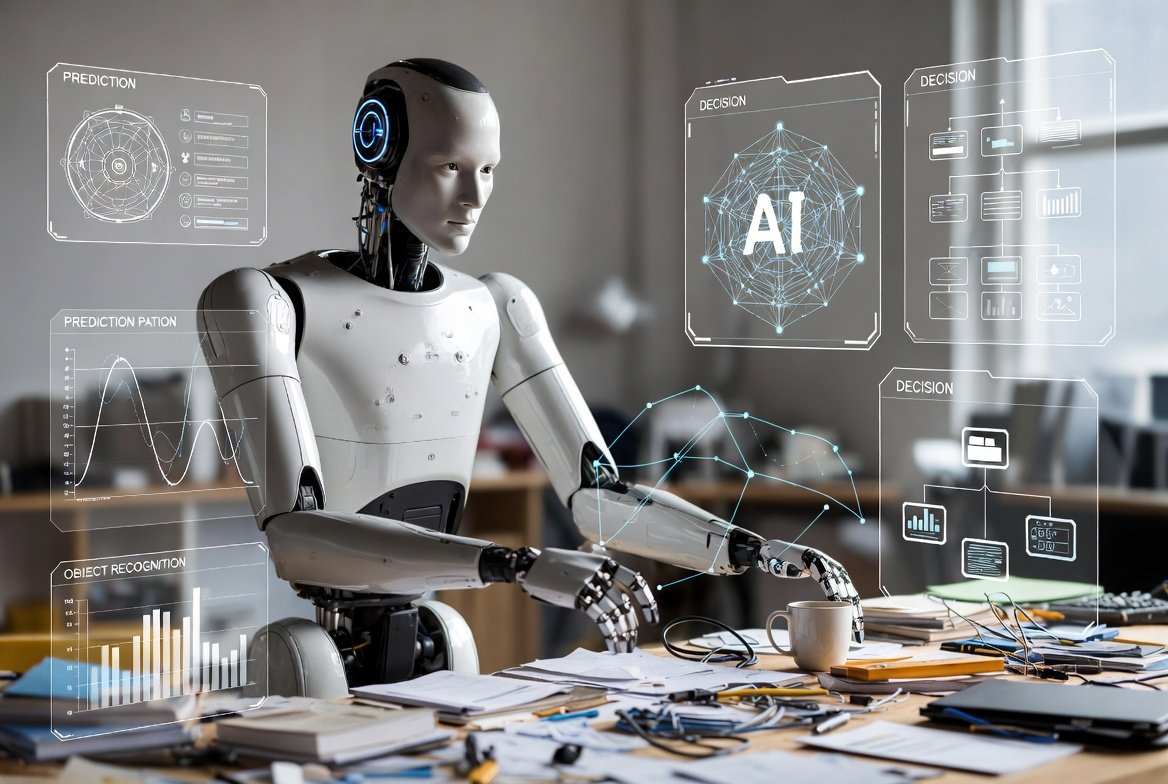
Generative AI robotics uses models like diffusion models, large language models (LLMs), and vision-language models to help robots:
Understand scenes in context
Predict outcomes of actions
Generate realistic plans
Learn from limited demonstrations
Adapt to new situations on the fly
These models turn raw pixels into rich world understanding.

Key Technologies Powering Generative AI Robotics
Vision-Language-Action (VLA) Models — Models that connect seeing, thinking, and acting
Diffusion Policies — For generating smooth, realistic robot movements
World Models — AI that builds internal simulations of the physical world
Multimodal Foundation Models — Trained on internet-scale video and text data
Imitation Learning + Generative AI — Robots learn by watching and imagining
Real-World Applications of Generative AI Robotics
Home Robots — Tidying rooms, cooking simple meals, assisting elderly
Warehouse Automation — Handling irregular packages and changing layouts
Healthcare — Assisting in surgeries or patient care with adaptability
Manufacturing — Flexible assembly lines that adapt to new products
Disaster Response — Robots that navigate unpredictable environments
Benefits of Generative AI in Robotics
Faster learning with fewer demonstrations
Better generalisation to new tasks
Improved safety through better prediction
Reduced programming costs
More natural human-robot interaction
From Simulation to Reality: Closing the Reality Gap
Generative AI helps robots train in simulation and successfully transfer skills to the physical world.
Major Companies Leading Generative AI Robotics
Figure AI, Tesla Optimus, Google DeepMind, Sanctuary AI, and 1X Technologies are making significant breakthroughs.
FAQ Section
What is generative AI robotics?
Generative AI robotics combines generative AI models with physical robots to give them better understanding, planning, and adaptability in the real world.
Can generative AI give robots true common sense?
It’s the closest we’ve come yet. While not perfect human-level common sense, these systems dramatically improve robots’ ability to handle everyday situations.
What is the difference between traditional robotics and generative AI robotics?
Traditional robotics relies on rigid programming. Generative AI robotics enables flexible, adaptive behaviour through learned world understanding.
How soon will we see generative AI robots in homes?
Early commercial versions are expected between 2026–2028, with wider adoption in the early 2030s.
What skills should developers learn for generative AI robotics?
Python, PyTorch/TensorFlow, robotics frameworks (ROS), computer vision, and prompt engineering for multimodal models.
11. Conclusion with CTA
Generative AI robotics is moving us from rigid, scripted machines to truly intelligent physical agents. By turning pixels into physical understanding, we’re entering a new era where robots can finally operate meaningfully in our messy, unpredictable world.
The fusion of generative AI and robotics will reshape industries, homes, and workplaces.
Ready to explore generative AI robotics for your business or project?
Contact the AI innovation team at Humai Webs today. We help UK companies integrate cutting-edge generative AI and robotics solutions.
Visit Humai Webs or reach out for a consultation.